

Benchmark the operational performance of your building with NABERSNZ
New Zealand’s leading performance certification for buildings, NABERSNZ helps businesses measure and optimise their energy and water use.
What is NABERSNZ?

NABERSNZ ratings are valid for twelve months. This annual model helps ensure that your rating represents a building or workplace’s current operational performance without excessive administrative burden.
Note that NABERSNZ ratings do not need to be publicly disclosed – it is at the discretion of the client whether or not it is published on the NZGBC website, for example, if a poorer rating was achieved ahead of some building upgrades.

NABERSNZ Rating Tools
In addition to measuring the performance on office buildings, NABERSNZ now includes shopping centres, retail stores, warehouses and cold stores.
NABERSNZ Energy for Retail Stores

NABERSNZ Energy for Shopping Centres

NABERSNZ Energy for Warehouses & Cold Stores
If you would like to find out more about the NABERSNZ expansion into new sectors, watch the webinar here
Why rate to NABERSNZ?
NABERSNZ creates value for anyone who designs, manages, lets or tenants a building.
-
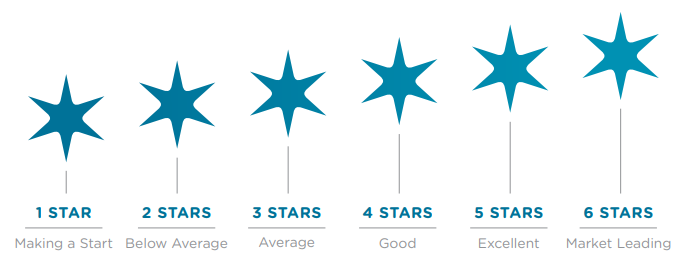
Owners: A building with a high NABERSNZ rating has the potential to attract high value tenants who may pay a premium for an energy efficient building – research by JLL in New Zealand shows NABERSNZ buildings command almost 10% premium in sales prices and a 6.7% rental premium when a building has a high NABERSNZ rating (6 star).
-
Tenants: Energy efficient buildings can reduce operating costs so tenants may look for a high NABERSNZ rating as a requirement. For example, NZ Government tenancies over a certain threshold have to have a 4 star NABERSNZ rating.
-
Property managers: A NABERSNZ rating gives you an independent basis for proving to your clients that you are managing their interests well. Alternatively, a NABERSNZ rating can help build a business case for improvements to a building.
-
Designers: Designers may use NABERSNZ rating as a guide for energy efficient design or even be required by a client to attempt to reach a particular NABERSNZ rating.
An international recognised standard, backed by governments
NABERSNZ is based on the National Australian Building Environmental Rating System (NABERS) and has been adapted for the New Zealand market. It is licensed by the New Zealand government’s Energy Efficiency Conservation Authority (EECA) and administered on their behalf by the New Zealand Green Building Council (NZGBC).

In Australia, NABERS is mandatory for commercial office space of 1000m2 or more which is offered for sale or lease.
From 2021 the New Zealand government has required all government offices above 2,000m² have a base build rating by December 2025. A tenancy rating is also required when a building is at or above 5,000m². Agencies entering a new lease, or renewing an existing lease should achieve a minimum of four stars, while government agencies planning a new build project need to achieve a minimum rating of five stars.
Benefits of a NABERSNZ rating
Understand
Through measuring and benchmarking, NABERSNZ helps develop an understanding of how well you’re managing energy or water use in your building or tenancy. You can get an idea of how your building is performing and where future efficiency improvements can be made.
Improve
A NABERSNZ rating is much more than just an accurate measure of how well you are using energy or water. Your Accredited Assessor can help you identify areas where you can improve energy performance to make immediate and long-term savings, often without additional capital spending. Once you’ve started the journey to better energy and water management, you can improve your star rating over time.
Compare
A NABERSNZ rating communicates at a glance your organisation’s commitment to energy and water management and can help you stand out in the marketplace. Ratings can be compared, regardless of building/tenancy size, or climate – it doesn’t matter if you're in Auckland or Invercargill.
Many building owners proudly display their NABERSNZ rating as a mark of quality. It helps potential tenants compare options, much like the star rating on household appliances help consumers make well-informed decisions.
How do I get a NABERSNZ rating?
A NABERSNZ rating generally takes six to eight weeks from start to finish. The best way to ensure a timely rating is to keep good records and have all the appropriate data on hand.
Generally a rating application will progress through the following process:
- The client engages an Assessor to carry out a NABERSNZ rating. Only NABERSNZ Accredited Assessors trained in the appropriate tool can do ratings.
- The Assessor compiles data, including a site visit to the building for verification, and inputs data to build a rating.
- The Assessor submits the rating for client authorisation.
- The client reviews and decides whether to proceed with the rating.
- NZGBC invoices for the certification fee required for the rating. [link to NABERSNZ fees page]
- NZGBC audits, and certifies the rating.
- The client is notified of certification and receives an electronic rating certificate and rating report.
Technical Resources
The current versions of the NABERSNZ rules for collecting and using data are available below.
Access to these files is restricted to accredited assessors with the appropriate accreditation
Frequently asked questions
Get in touch with the NABERSNZ team if you'd like to discuss getting a NABERSNZ rating for your building or portfolio
A NABERSNZ rating generally takes six to eight weeks from start to finish. The best way to ensure a timely rating is to keep good records and have all the appropriate data on hand.
Generally a rating application will progress through the following process:
-
The client (building owner/manager/tenant) engages an Assessor to carry out a NABERSNZ rating.
-
The Assessor compiles data, including a site visit to the building for verification, and input data into the Certified Rating tool.
-
The Assessor submits the rating for client authorisation.
-
The client reviews and decides whether to proceed with the rating.
-
NZGBC receives and registers certification payment.
-
NZGBC audits, verifies and certifies the rating.
-
The client is notified of certification and receives an electronic Rating Certificate and Rating Report.
The key to a timely and accurate NABERSNZ rating is preparation. You’ll need to make sure you have all the necessary data on hand and readily available for your NABERSNZ Assessor. This will save you time and money and make the process much easier.
Data required for a NABERSNZ Certified Rating:
-
Utility bills covering 12 months of energy data
-
Up to date survey drawings inline with PCNZ standard
-
Hours of occupancy
-
Computer counts for tenancy or whole building rating
A free online self-assessment rating is also available to help get an initial idea about how your property might rate and what it will take to achieve a target NABERSNZ Certified Rating. The results of this tool are indicative only, based on the data you submit and should not be taken as a guarantee of achieving a specific star rating or promoted or published.
A rating is conducted by an Assessor in compliance with the NABERSNZ Rules for collecting and using data. In some circumstances your Assessor may require more detailed information to perform your rating application.
Note that submetering is required for tenancy or base building ratings. If there is inadequate submetering, a whole building rating should be performed.
A NABERSNZ rating is just the start of a journey and provides a snapshot of your energy performance for the previous year. Once you know how efficient your premises is compared to your peers, you can start to make improvements ahead of re-rating. Here are some useful tips to save energy use and improve your rating next time:
-
Establish an energy management strategy for your company
-
Energy monitoring and reporting helps identify areas of inefficient energy use
-
Fine tune and commission to improve current building management systems to efficiently control lighting, heating and cooling system
-
Install energy efficient lighting
-
Behaviour changes of tenants and employees to take consideration of energy savings (e.g. turn off lights, monitors, appliances when not in use)
-
Replace non-energy efficient office appliances
Your NABERSNZ Assessor will be able to provide personalised recommendations based on your current rating
We are seeing a growing number NABERSNZ related clauses as part of new building design agreements and retrofit projects, and there are strong needs from design teams to correctly understand NABERSNZ requirements on sub-metering. NABERSNZ requires tenancy and base building loads to be metered separately. It is recommended that all sub-metering is installed in accordance with the NABERSNZ Rules.
More broadly, buildings with more efficient systems and renewable energy sources will likely achieve higher ratings. If you are committed to achieving a high NABERSNZ star rating, we would encourage energy efficiency be prioritised early in the design of a new build or fit-out project.
NABERSNZ looks solely at energy performance, and is used once buildings are occupied and operating for a year or more.
Broadly, Green Star certification considers the design and construction of a building and assesses a range of environmental criteria. Green Star - Performance NZ does consider building operations, however, while NABERSNZ is purely concerned with energy use, Green Star - Performance NZ considers other emissions factors such as waste, water use, use of refrigerants etc.
Either can rate warehouses but each tool has its advantages, disadvantages, and use cases.
Green Star Performance is able to rate all warehouses, including manufacturing warehouses and workshops using a base building approach if submetering is available. This tool is versatile in that it can rate a single building or a portfolio of buildings, including a portfolio calculator which can simplify the process and make it more cost effective. The benchmarking and normalises in a relatively simple way so is not going reflect the increased energy consumption of conditioned vs non-conditioned spaces.
NABERSNZ Warehouses and Cold Stores can only rate logistics warehouses. This limitation means it cannot be used for manufacturing warehouses or any operation that changes the form of a product. It only rates one building at a time – there is no portfolio approach available. This means each rating will be charged the appropriate certification fee separately. The benchmarking and normalisation behind the NABERSNZ tool is quite sophisticated and can take into account conditioned or non-conditioned spaces to create a fair comparison.
Contact the NZGBC for more information and guidance on the above to suit your situation.
PRICING
Certification fees
NABERSNZ
Project Certifications
| NABERSNZ Type | Energy | Water | Energy + Water | Subsequent buildings/tenancies |
|---|---|---|---|---|
| Standard | $2000* | $2000* | $2900 | |
| Small Buildings** | $1000 | $1000 | ||
| Retail Stores | $1000 | $500 |
NABERSNZ pricing T&Cs
* Individual ratings may receive a $300 discount for re-ratings or when 3+ ratings are registered as the same time.
** Small building thresholds below:
| Sector | Area measured | Small building threshold (m2) |
| Office (whole / base building) | Rated Net Lettable Area (NLA) | <2,000 |
| Office (tenancy) | Rated NLA | <1,000 |
| Retail Stores (standalone) | Rated Gross Lettable Area Retail (GLAR) | <1,000 |
| Retail Stores (tenancy) | Rated GLAR | <500 |
| Shopping Centres | Rated GLAR | <12,000 |
| Warehouse /cold store | Rated Site Area | <5,000 |
*** If registered and submitted together as a bundle. When bundled, the first retail store is $1,000 and any additional stores are $500 each.
Find a NABERSNZ Assessor
Explore our directory of trained NABERSNZ professionals equipped to help you benchmark your energy performance
NABERSNZ case studies
Learn from some of the country's leading organisations committed to measuring and improving their energy performance